I invested in Littlebird. Then I Put It on My Kid. Here's What I Know Now.
By Jessica Kamada
I have two sons. They're five and seven. And like most millennial parents, I've been quietly dreading the moment one of them asks for an iPhone.
We didn't grow up that way. We grew up roaming the neighborhood until dinner, knowing somehow that the street was watching, neighbors, other parents, that invisible web of community eyes that kept kids safe without GPS coordinates or push notifications. That world isn't gone, but it's thinner now. And in its absence, parents have been handed a binary choice: surveillance or anxiety.
Littlebird is what made me believe there's a third option.
Why I Invested
When we first looked at Littlebird, I was coming at it from two angles, as an investor and as a mom. Those two lenses don't always agree. But in this case, they converged fast.
The IP is what got us to write the check. Littlebird is the only product on the market that can do true device-to-device handoffs: real-world caregiver transfers with actual location precision. That's not a feature you can bolt on. It's architecture. Compare it to an AirTag: no handoff logic, no caregiver context, no use case for a child moving between adults across a day. Littlebird built something genuinely novel. That's rare.
But beyond the technology, what I kept coming back to was the cultural moment. Millennial parents are hungry to give their kids back something that was taken away — not by bad actors, but by ambient fear. The Anxious Generation didn't invent this feeling, it just named it. Parents want their kids to have 90s childhoods. They want them to build autonomy. They want to let go, and they just want to be able to breathe while they do it.
Littlebird is infrastructure for that.
How We Actually Use It
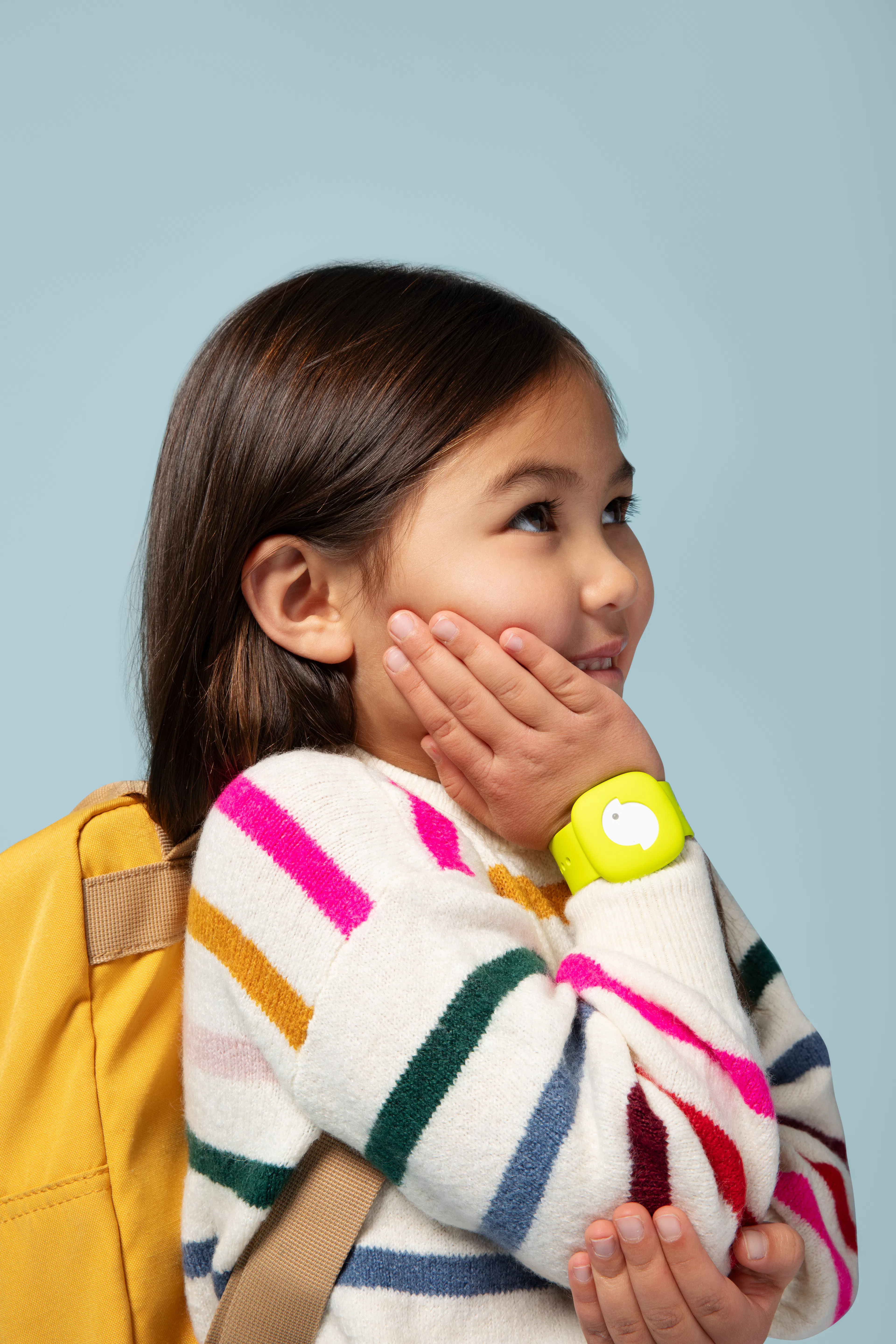
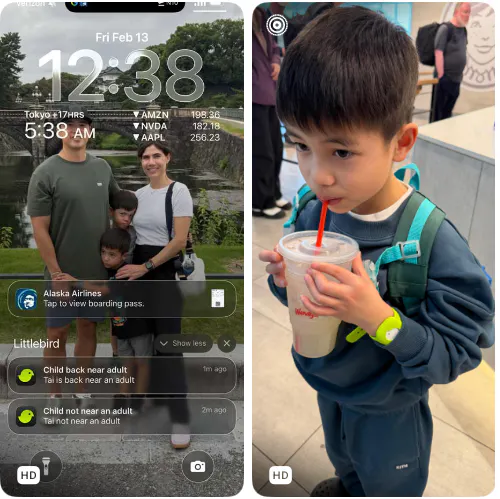
My seven-year-old, Tai, has been wearing Littlebird since almost the beginning. First grader. He loves it, partly because he was one of the first kids to have one and the other kids think it's cool, which is its own small miracle of product-market fit.
For us, it's woven into the daily rhythm in ways I didn't fully anticipate.
I can see when he's been dropped at school. He goes to aftercare, and sometimes they take field trips, so instead of refreshing a teacher's email or texting the room parent for the fourth time, I just check Littlebird. I know where the group is. I know when they're back. I know when he's ready to be picked up.
On Saturdays in winter, he has ski school. The mountain is big. Instructors run late. Lunch timing is always chaos. Littlebird turns "I wonder where he is on the mountain" into a non-question. I check, I know, I head to the right lodge.
And the handoff piece, honestly, that might be the one I use most emotionally. When it's not me picking him up, I know exactly who he's with and where he is. Not because I don't trust the people in his life. But because knowing is different from trusting blindly, and both can be true at once.
What I Want Next
No product is finished. And the feedback I find myself giving Monica most often is about haptics and notification intelligence.
Right now, there are a lot of notifications. And my worry - the real one - is that notification fatigue means I'll miss the one that actually matters. The solution isn't fewer alerts, it's smarter ones. Notify me when I'm not the one with him. Don't notify me that I dropped him at school, I was there. But tell Ken. Tell whoever isn't holding the context.
The other thing I keep thinking about: geo-boundaries with haptic feedback. My kids are in that phase where they're in the yard one second and at the edge of the driveway the next. Cars exist. Streets exist. And right now, I either hover or I guess. What I want is something that buzzes Tai's wrist gently as he's approaching a boundary, not punitive, just a cue, while I get a notification that tells me he's near the street. Peace of mind in two directions at once.
That's the version of Littlebird I can already picture. And knowing Monica, it's probably closer than I think.
The Bigger Picture
There's a statistic I think about a lot: more college graduates are returning home to live with their parents than at any point in modern history. That's not a housing story, it's a development story. Kids who weren't given the space to build independence in small doses don't arrive at adulthood equipped to handle the big ones.
Giving Tai a Littlebird isn't surveillance. It's the opposite. It's what lets me say go play outside instead of stay where I can see you. It's the infrastructure of a childhood with room to breathe.
That's why I invested, and why I we are a Littlebird family.
Jessica Kamada is an mom and an early Littlebird investor.