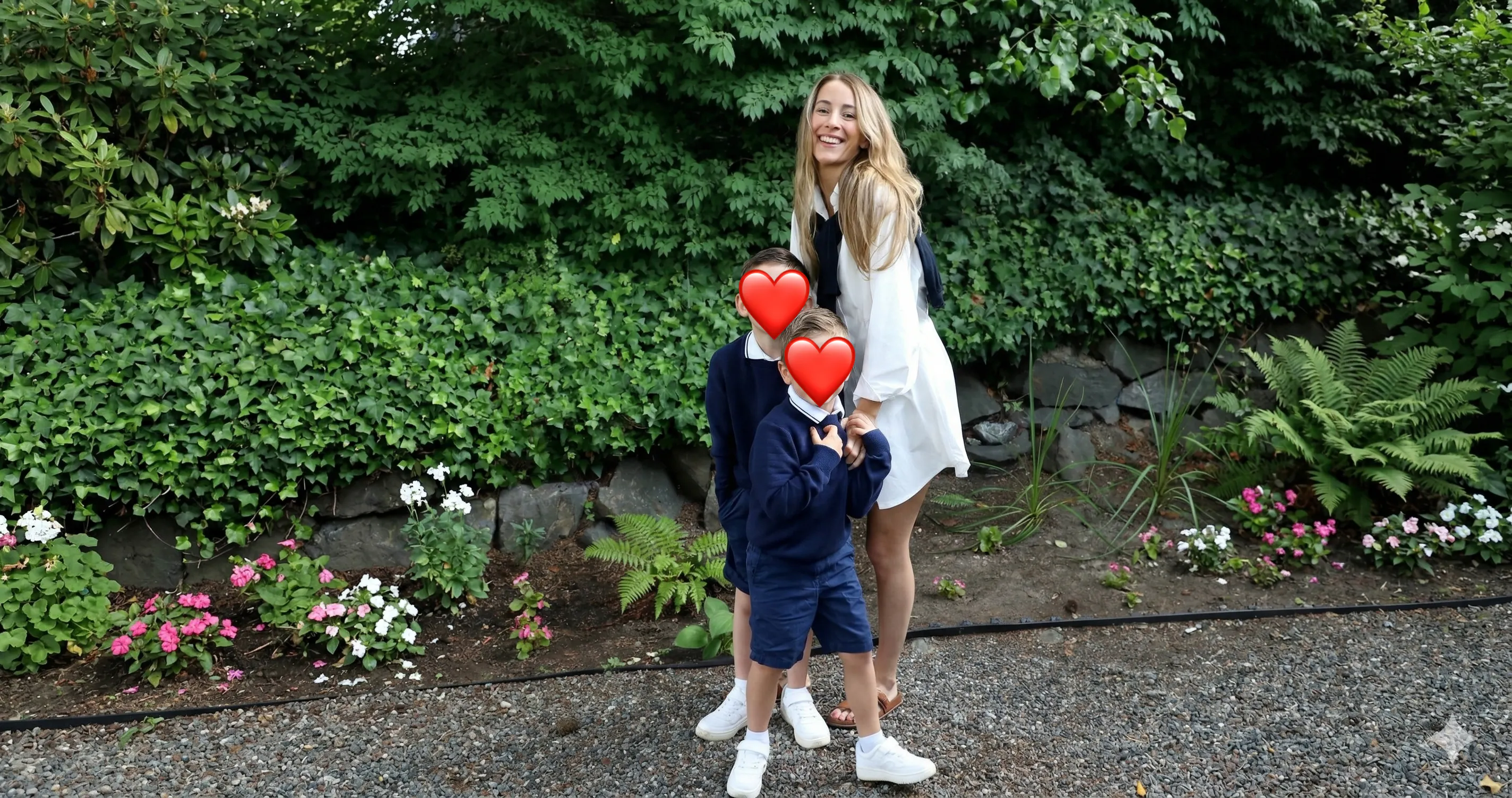

The Moment the Baby Monitor Stops Working
I didn’t build Littlebird as a founder.
I built it as a mom who ran out of answers.
There is a moment in parenting that no one prepares you for.
It is the moment your child outgrows the baby monitor but is not ready for a phone.
They leave the bedroom.
Then the house.
Then your line of sight.
And suddenly, the systems we have built for parents just stop working.
The baby monitor does not follow them.
The tools do not evolve with them.
And you are left in the middle, guessing.
Are they okay?
Where are they?
Are they safe?
Have they been active enough today?
Am I doing enough?
This is not about control.
It is about clarity.
The Invisible Load No One Talks About
There is something else that happens in that gap.
The mental load intensifies.
Because while parenting is shared in many homes, the responsibility of knowing, tracking schedules, safety, activity, and wellbeing still disproportionately falls on moms.
Research shows that mothers carry roughly 65 to 70 percent of the mental load of parenting and household management, even in dual-parent households.
And for the more than 11 million single parents in the United States, most of them mothers, there is no distribution of that load.
It is constant.
And for those who feel the need to ask, no one dreams of becoming a single parent to a one- and two-year-old.
It is not a narrative.
It is a reality.
And it is a deeply personal one.
There are days every month when I do not know where my kids are or who they are with.
And that reality changes how you move through the world.
This Is Not Just a Single Mom Problem
What I have learned is this:
This is not just about single parents.
It is about the single working moms juggling everything.
The “single married moms” carrying the invisible load.
The happily married moms still managing the details, the logistics, the knowing.
It is about a breakdown in communication.
A lack of shared visibility.
A gap between where our children are developmentally and what tools exist to support them.
We call this the independence gap.
And it affects 42 million children in the United States who are navigating more independence than our systems were designed to support.
We Built Technology for Everything Except This
We built baby monitors for the home.
Smartphones for teenagers.
Trackers for keys, wallets, and luggage.
But we skipped a critical phase of childhood.
The in-between.
The years when children begin exploring the world but still need support.
The years when parents want to give freedom but still need reassurance.
Instead, we gave families two options:
Overexpose kids to screens.
Or leave parents in the dark.
Neither felt right.
This Was Never About Tracking
When I started building Littlebird, it was not because I wanted to track my kids.
It was because I wanted to know they were okay.
To replace anxiety with information.
To replace guessing with understanding.
To answer simple, human questions:
Where are they?
Are they safe?
Are they moving, playing, and exploring like kids should?
And maybe the most important question of all:
Can I let go, just a little, without fear?
The Emotional Reality of Mom Guilt in the Modern World
There is a specific kind of guilt that comes with modern parenting.
The kind that shows up when your child asks for screen time and you are not sure if they have moved enough today.
The kind that shows up when you are working and wondering if they are okay somewhere else.
The kind that lives in the quiet moments late at night, running through scenarios you hope never happen.
It is not irrational.
It is a response to a system that has not kept up with how childhood has changed.
What Parents Actually Need
Parents do not need more notifications.
They do not need more noise.
They do not need more screens.
They need clarity.
They need confidence.
They need connection without intrusion.
They need tools that match the reality of modern parenting.
Tools that support independence, not replace it.
Tools that empower children while reassuring parents.
Tools that feel like infrastructure, not surveillance.
This Is Bigger Than Me
Littlebird started as a personal need.
But it quickly became something bigger.
Because every conversation I had with other parents, especially moms, echoed the same feeling:
“I just want to know they’re okay.”
This is not about helicopter parenting.
It is about supported independence.
It is about building a world where kids can explore freely and parents do not have to carry the full weight of uncertainty alone.
A New Category of Care
We are entering a new era of parenting.
One where technology does not replace connection. It strengthens it.
One where safety is not reactive. It is proactive.
One where peace of mind is not a luxury. It is a baseline.
This is what we are building.
Not just a product.
A new category.
A new standard for how we care for our children in an increasingly complex world.
For the Parents Who Carry It All
If you have ever laid awake at night running through the what-ifs,
If you have ever felt the weight of needing to know everything, all the time,
If you have ever wished there was something built for this exact moment in childhood,
This is for you.
You are not overthinking it.
You are not asking for too much.
You are a parent.
And you deserve better tools for one of the hardest, most important jobs in the world.